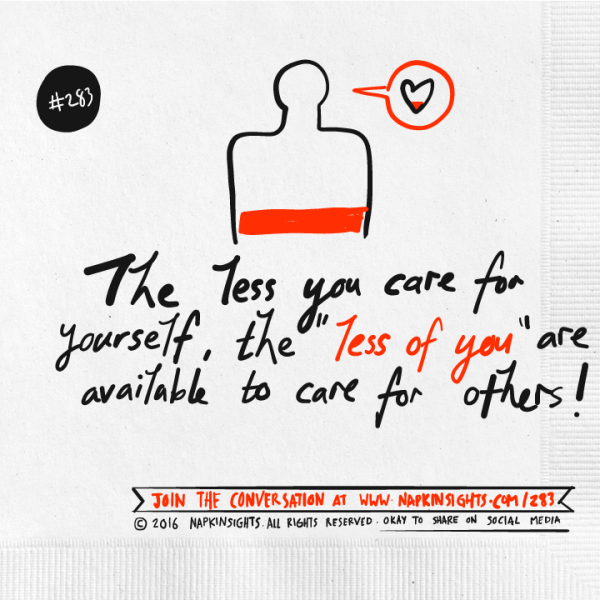
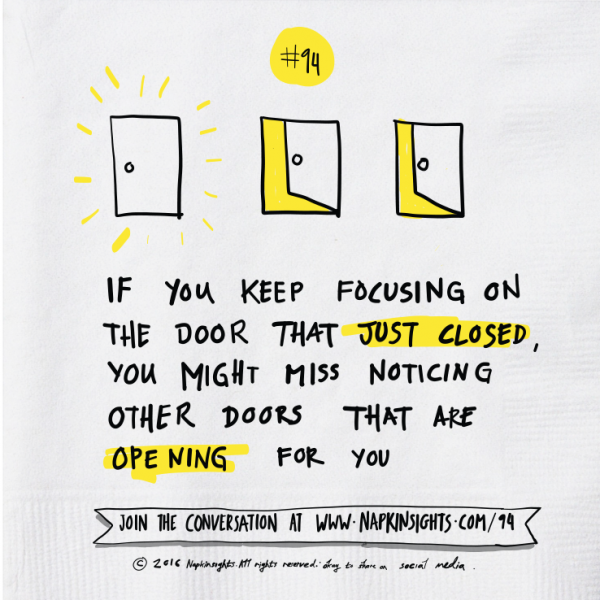
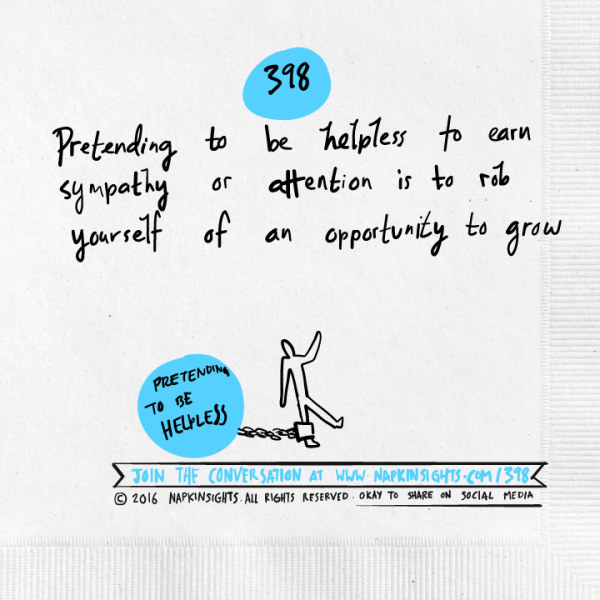
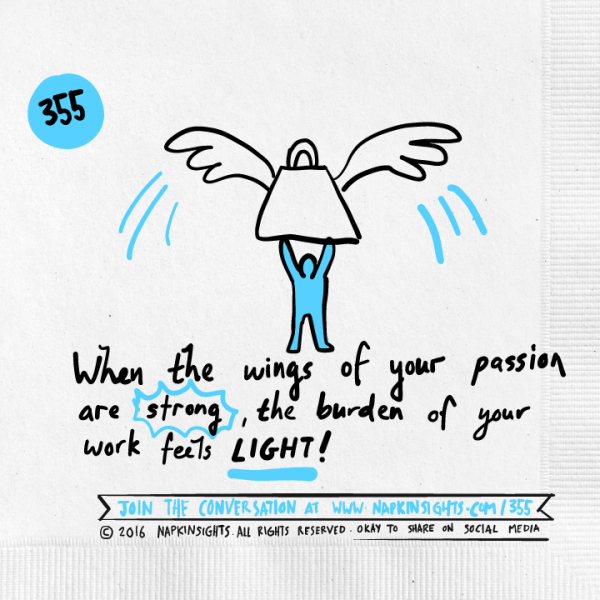
Here you’ll find more than 1500 articles and mini-sagas on entrepreneurship, leadership, creativity and simply how to distinguish yourself.
You REALLY should subscribe to our newsletter too - you will get exclusive content that is NOT featured on this blog once or twice a month. It's even 100% free!
The other day we were at the beach in Carmel. Sumukh spotted a bubbly dog Joe jumping into the waves to fetch a ball. His Master was throwing the ball quite deep. Joe would not only spot the ball but would rush through the waves to fetch it in a matter of a couple of minutes – every single time.
Joe made it look very easy. Almost making us feel like any other dog could do it too. It was great to watch him go and fetch the ball against those waves.
When Joe was right next to us, Sumukh remarked, “Joe should really like that ball. He is going after it quite well..”
The response from Joe’s Master was – “Yeah, he likes it… but really, he is here for a couple of hours every single day. He has been doing it for years.”
That really explained it all.
As you can see, this is no different from how it is in the business world. You see some people making magic. You only see the magic and its awesome but what you don’t see all the practice that has gone behind the scenes that is making it easy to perform that magic.
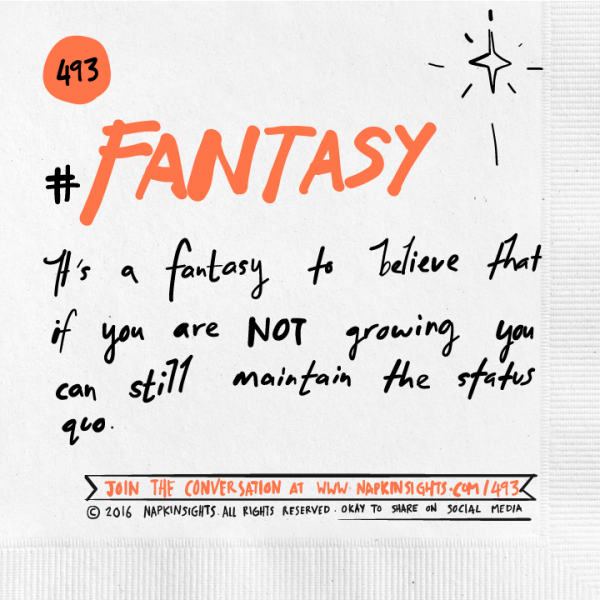
Most people confuse their wishes and fantasies to be burning desires.
In simple terms, a wish is something that you want and you have no interest in paying the price to get it. Similarly, a burning desire is something that you want but you are willing to go the length to get it. In both cases, people will passionately talk about it.
The confusion happens when the “wishing” person is highly articulate and persuasive. It makes you feel that the person has a burning desire to make something happen.
What would be a test – a sort of litmus test to separate the two?
A simple test would be to notice and observe what was at stake as they went after their wish or burning desire. If nothing substantial was at stake, there is a good chance that it was a “wish.”
Why is this important to know?
The “pure wish” people are not serious but they appear to be. If they are charming too, then they might make requests off of you to engage with them to discuss their “wish” projects. You will now put something precious ( your time ) at stake to help someone who is really only looking to spend time talking about it. If you fall for it, you incurred an opportunity cost and the “wishing” person simply had a good time at your expense.
Make your help count. Investing your energy for people with “burning desire” will make something happen. If you spend your energy on the “wishing” crowd, you won’t have the time to spend your energy on people with “burning desires.”
You are busy like everyone else and you forgot to thank someone for a favor received. You make a mental note that you need to thank that person when your time frees up a time. But as everyone else you get busy with your projects and soon one of the two things will happen – 1) either you are too busy to thank or 2) it is too late to thank ( that’s what you think )
Let’s take the second case – it is too late to thank. It is NEVER too late to thank someone. You are doing a disservice to yourself if you are holding back on genuinely expressing your gratitude however far back the favor was extended.
Now, let’s look at the first case – you are too busy to thank. Rather than simply saying you should just make time to thank, let us look at the price you pay for NOT thanking. Here is how it goes:
1. You may end up on a mental blacklist: The person who extended the favor knows the effort involved in extending the favor to you. While not everyone expects you to reciprocate back, most of them at least expect you to appreciate the effort and thoughtfulness in extending the favor. When they don’t get that, it makes it easy to “mentally blacklist” you. The effect of that is simple – your future requests if any will go into a “low priority” queue or simply get ignored.
2. You may lose the license to make a future request: Even you know that you didn’t thank the other person last time. So it might be embarrassing for you to go back again to the same person.
3. You might undermine the favor and over-estimate your strengths: One reason you might not thank someone is that you might think it did not take a lot of work on the person’s part to extend the favor. This happens if you see things superficially. The person might have just made a phone call. You can look at the action is the “phone call made” or think about all the effort the person had put in so that he was qualified to make that phone call. When you underestimate the effort made, there is a chance that you will over-estimate your own strengths to get that job done. If they didn’t help you a lot, then you might assume that everything was done simply based on your capacity to get things done. Make this mistake and this can hurt you big time in the future.
4. You may feel guilty for not doing that: You know you should have thanked and you know that you didn’t. The guilt can simply eat you from inside.
5. You might end up looking like a jerk: In some cases it might be so clear that you should have thanked and everyone around you know that. In those situations people quickly make an assessment about what kind of a jerk you are.
6. You might start getting used to taking people for granted: This is the most dangerous way of paying a price for not thanking enough. Nobody likes to be on the other end when it comes to taking people for granted ( read more )
I can go on but the point is simple – the right thing to do is to extend thanks to anyone and everyone who extended favors to you. The alternate option is to pay a price now and in the future. Your choice.
Kavitha and I had an opportunity spend the evening with the giants in the world of presentations – two people that have influenced how I create and deliver presentations – Garr Reynolds and Nancy Duarte.
Nancy had organized a get-together hosting Garr at her office. We had an opportunity to meet several wonderful people. The highlight of course was a spell-binding presentation from Garr about his upcoming book – The Naked Presenter. Garr spoke for about 32 minutes – that’s what he said but I just couldn’t believe it. It was fast-paced, fun, interactive and the slides were BRILLIANT!!
There were so many lessons to learn. Here are a few:
1. Respect: The level of respect and appreciation Nancy and Garr had for each other was very clear. There is a lot to learn there. Both of them are BRILLIANT at what they do and they are still learning from each other. Lesson for the rest of the world creating presentations: There is a lot MORE to learn.
2. Giving: Although Garr was speaking about his upcoming book not even once he asked anyone to buy it . I am sure a lot of people have already pre-ordered the book as a case was made brilliantly via his presentation.
3. Humility: Although I have followed both of their work for years but I had never met them. They were both the nicest people to meet and very humble too. Great combination.
4. Grace: There was a question from the member of the audience where Garr was asked to pick his favorite presentation software. Garr’s answer was on the lines that tools were tools and it is YOU and the CONTENT that’s important. The person asking the question followed up again requesting Garr to pick a software – Powerpoint or Keynote to be specific. I loved the way Garr gracefully declined to answer that and moved on.
5. Thoughtfulness: This is for Nancy. There was a question from the audience about presentations and after Garr responded he turned back to Nancy and asked if she wanted to comment on the question. Nancy didn’t blink an eye when she told Garr that it was his day and he should take it all. Knowing Nancy’s work, I am confident that she could have responded to this but she didn’t. It was a lesson in thoughtfulness delivered brilliantly.
Also, the staff at Duarte Design were super-friendly – not surprised at all that they were like that
I have not found someone who loves spam. The feeling everywhere is that spam is bad. In fact, most people detest spam and people who engage in spamming.
So I am sure you are not engaged in spamming people.
You are sure?
Well, are you really sure?
May be in the way you look at a typical spam message.
Let us take a look at spam again.
1. It is a message that is unsolicited
2. It is cold – comes from someone that you don’t know very well.
3. It is mostly generic but looks like it’s personal
4. An action taken based on the email will be useful to the sender or someone on behalf of whom the email was sent.
5. The same action is not very useful to the recipient.
6. It takes time to process that email introducing an opportunity cost.
Now think about an email that you sent to someone that you didn’t know very well where you made a solid case for them to help you with your project.
Now go through that email with the spam checklist above.
Ta Da!
It matches 6 out of 6.
Congratulations for being a spammer. If you continue to do this day in and day out, you will become a Pro soon!
To make it simple – spam is something unsolicited that has a lopsided consumption to contribution ratio.
[ consumption is what you get; contribution is what you give]
If you think someone you know is spamming, gently send them a link to the blog post. May be they will get a hint
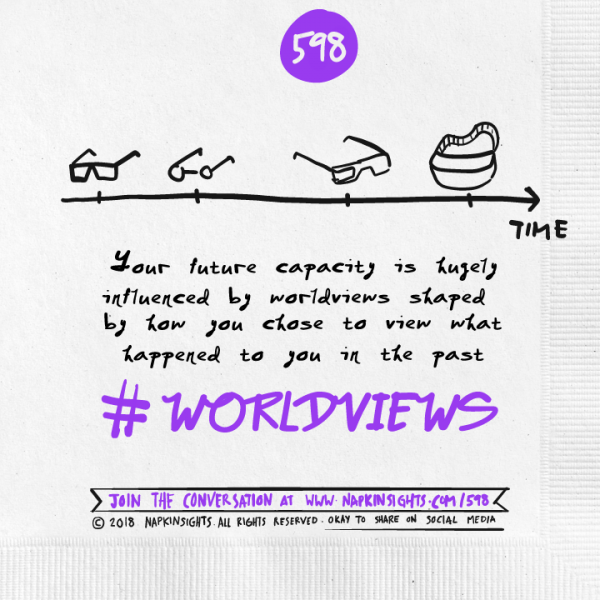
Modeling someone that you respect is a great way to push yourself to be better than who you are. Role models help you to set higher benchmarks that will push you to perform better. The beauty of following role models and setting higher benchmarks is that you don’t have to wait to reach those levels to see a marked difference in your life. The journey will produce its own rewards along the way.
So, having the right role models and benchmarks is a double win – a prize at the end and several prizes during the journey.
On the flip side, get the wrong role models and your life can be a mess. All of you are smart to know this and I am sure you will ensure that you will NOT fall for that trap.
It gets tricky when you have a right role model but you choose the wrong benchmark from that role model to follow. The difference is subtle and It is hard to notice it at first. If you make a mistake here, you will take on a journey that will give you a perception that you are on the “right track” for a long time – when in fact, all you will be doing is “getting tired.”
A case in point ( please treat this ONLY as an example )
I was talking to friend about social media and very soon we started talking about Twitter. He was on Twitter for a while and he was frustrated a bit about the fact that hadn’t “broken” the 1000 followers mark yet. He was fascinated by all the people who had hundreds of thousands of followers. His point was that if he took the time to emulate one or two of them he will be on his way to a few thousand followers. He just had to take the time to do it.
Out of curiosity, I asked him to name two or three people that he was totally fascinated by. Upon further prodding, he talked about why he was fascinated by them and why they were his role models. After digging deeper on the topic for a few more minutes, it dawned on him that the people that he was fascinated by needed those Twitter followers to support their core business. It was a “required” part of how they operated in life and business. It was a clear means to an end.
On the other hand, my friend could have done a dozen other things the same time he would have spent getting those Twitter followers. However we sliced it and diced it, we could not find a solid reason for him to have that as part of his strategy to go where he wanted to go.
This is one of those cases where even if he had won, he would have lost in the end.
Now, I am not suggesting that having a LOT of Twitter followers is not worth it. The question is “how much is it worth it for you to spend that time” or asked differently, “what else could you have done in the time you spent on acquiring those Twitter followers?” [May be, may be - if you spend that time where your heart is, those Twitter followers will come anyway ]
To put it another way, you can be fascinated by someone but that does not mean you have to follow everything they are doing. You don’t know the strategy behind all their actions. They are like puzzle pieces in their game. You might see the individual puzzle pieces but only they know how the completed puzzle will look like. They are smart people and obviously what they do is working for them. You can learn from them but do not have to follow ALL their actions unless those actions are aligned to help you fulfill YOUR own strategy.
A mis-aligned benchmark can hurt you in the long run. Only you are RESPONSIBLE to notice the mis-alignment before you make a huge investment.
Kavitha and I had an opportunity to listen to Neal Baer ( Producer of Law & Order SVU) at IDEO recently. You may already know this but every week 58 million people watch one or the other episodes of Law and Order SVU.
Nael talked about many things but the highlight of the talk was the power of storytelling ( especially on the mainstream media ). Neal used several examples and one that I made some notes was an episode about HPV (Human Papillomavirus). The focus area of the episode was to educate that the persistent HPV infections was the leading cause of cervical cancer.
Neal explained how they extended the project in collaboration with Kaiser Permanente by surveying people about HPV before and after the show. The surveys were conducted before the show, 1 week after the show and 6 weeks after the show.
The focus was to find out whether
1. the person had heard about HPV
2. the person could define HPV
3. the person knew that HPV was the leading cause of cervical cancer
As you can see from the interactive chart ( from iCharts) below, the show had made a significant impact on people’s knowledge about HPV. You can also see that the level of awareness about this topic was the highest within the week the show was aired. Six weeks later there was a big dip but compared to the awareness before the show, it was a significant jump.
That is the power of storytelling right there.
Also looking at the dip after a few weeks, you can also see the need to tell the same story again and again.
Data can tell powerful stories too. You can check out a few stories here:
Every human being is different and connecting with another human being will require some investment of time, energy, mindshare and of course, there is an opportunity cost always – you could be doing something else right.
Here are the nine components to consider:
1. Character: Connecting or not, a strong character forms the foundation on which trust can build. Without that, it will be a herculean effort to make headway.
2. Commonality: Identify the common elements between you and the other person and you have taken the first step to building rapport.
3. Curiosity: If you are not curious about who you are connecting with, you will talk rather than ask. And, nobody wants to listen all the time
4. Conversation: You have to start a conversation with the other person. Earlier it had to be via phone call or email. But today, you have a lot more avenues to begin a conversation.
5. Cost: Watch the cost for the other person to engage in the conversation. If you make it too high, you might have a n non-starter
6. Curation: Building connections is a lot of hard work. Rather than taking baby steps with a lot of people, you can “curate” first and make the right choices before making those investments.
7. Commitment: I continue to believe that there are only two kinds of relationships. One is long term and the other one is very long term. Very long term ones trump the long term relationships. Better yet, commit to lifetime relationships so that you don’t even get a funny idea to take advantage of the relationship.
8. Compassion: You are human and the other person is human too. Mistakes happen and what counts big time is the intentions behind the actions. Have the compassion to understand that the ups and downs of a relationship.
9. Caring: The real bonding happens when you authentically care for what the other person cares about. Not faking it but really caring for what the other person cares about. It is magical.
Three Bonus Elements
( If you have the time for more that is…)
1. Charisma: It’s hard to define it but everyone knows when they see someone who has it. It is one of those magical powers that has the ability to influence and persuade you.
2. Confidence: If you are not confident, you will start leaning more on others for support. Nobody wants to play the role of a “permanent crutch” in your life.
3. Clarity of Purpose: It is so important to have a clarity of purpose but it is a hard thing to do. But in case you are one of the special people who does have a clarity of purpose, you make it easy ( BIG TIME ) for the other person to engage with you.
Free Download: Lasting Relationships
If you have not downloaded a free e-Book on building lasting relationships, here is the link to that page
You can skip the assignments but you can’t skip the consequences of skipping the assignments.
Mini Saga #59 – Assignment
Jack got a bit carried away during his school days. He outsourced all his assignments. Born to rich parents, there was money to get the grades he needed to get through. The problem started when he started working. The grades he had weren’t sufficient to get the money he needed.
Note:
1. A mini saga is a story told in exactly 50 words. Not 49 or 51 but exactly 50.
Recent Comments